Showing posts with label medical ethics. Show all posts

Wednesday, November 19, 2008

Look at the Wonderful Things that ADULT Stem Cells Can Do


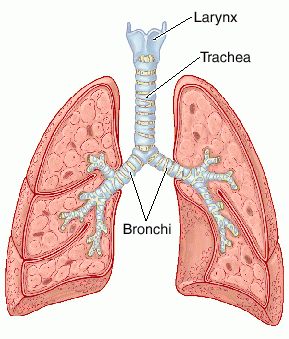
The above article describes a woman previously diagnosed with severe tuberculosis who underwent a trachea (windpipe) transplant. A trachea was taken from a cadaver, and the live cells in the cadaver's trachea were allowed to die. The recipient's bone marrow cells, which had previously been harvested, were then cultured into the the cadaver's trachea (which is made primarily of cartilage). The trachea was then transplanted into the recipient patient, and 10 days postoperatively, she went home.


The patient could have received the cadaveric trachea, but she would have then risked transplant rejection, and had to have been on chronic immunosupression therapy. By altering the donor trachea with her own stem cells, her body would not recognize the transplanted trachea as foreign, but rather as a part of her own body. Other potential side effects and complications remain to be seen, as this was the first surgery of its kind. Truly amazing indeed.


They note several times in the article that stem cell research is controversial. What they fail to emphasize is that ADULT stem cells were used, the patient's own bone marrow. As a Catholic, I see no more controversy with bone marrow stem cell donation as I do with donating blood (incidentally I just donated a unit of blood at a blood drive run by and at my church not too long ago). This IS NOT embryonic stem cell research.


The success of Ms. Costillo's treatment remains to be seen. However, the path taken has paved the way for many, ethically acceptable possibilities for medical research. Hybrids between adult stem cells, donor organs, and artificially engineered organs puts forth a myriad of possible combinations wherein patients afflicted by chronic diseases can have hope for a better quality and quantity of life.

Friday, September 26, 2008

Take Care of Her Like She's Your Mom

One day while I was covering OB during my residency, a friend of mine entered the ward in labor. She saw me, and said, "Hey, would you place my epidural?" I said yes, but later asked my attending to do it. I thought, "What if something goes wrong? What if I can't get it in? What if she is in pain? How would I be able to face her? It would change my relationship with her." From that point on, I had decided that I wouldn't have any patients that were my friends.

This week, my rule was tested. Since I am in a new job, I don't feel comfortable making schedule changes. This would have unravelled an intricate web of scheduling that had already been set in motion that morning. I chose not to back out of this case, and chose to face my fear. I took care of a friend's mom. I had seen the patient's name on the schedule, and thought, "Surely it couldn't be the same person. How many Jane Does could there possibly be?" I looked at the address on the electronic chart, and saw a different address than the one I had so frequently visited way back when. I thought, "Whew." But as I walked into the "Pre-Op" area, where the patients are picked up by the nurses, who then bring them back to the operating room, I saw her. And I had no doubt it was her (apprently she moved). She had the same face as her child, the same eyes, the same slope of the nose, the same coloring. Except today, her brow was tense, her lips pursed. She was scared. I approached her, smiled, and greeted her in a very soothing voice. She looked at me with recognition, but didn't say anything except in response to my medical questions. We did not talk at length about her child, my friend. After all, today was about her. Her health and well being were my priority at that moment. And she was scared, so part of my job was to reassure her that I would take good care of her. So I did.

I like to think that I take care of each patient as if he or she were my own loved one. This week, I was actually faced with knowing the person I was anesthetizing. Not only was she someone's loved one; she was a someone-whom-I've-been-close-to's-loved-one. I had never been faced with this responsibility until then; and I was d*mn scared. My heart raced. My voice was high pitched. My palms were sweaty. I trembled. But I thought, "Hey, Map, snap out of it. You've done this thousands of times. Just do your job and take care of your patient." So I calmed down. Finally.


My patient did well. After she awoke, we were able to talk about our connection, her child, what her child is up to, and what I am up to. She did great, felt great in the recovery room. And so did I. I hit a milestone in my career, having overcome a fear of taking care of patients familiar to me.

After talking to other anesthesiologists, I have found that others differ in their opinions regarding having friends as patients. We all wonder how patients feel about having friends anesthetize them. Certainly, many patients place special requests, and ask for specific anesthesiologists to take care of them. Some patients refuse to be treated by certain anesthesiologists. Some anesthesiologists agree to be called in to place an epidural when a friend goes into labor, while others give excuses to not be available, or just flat out refuse. Some find that taking care of friends or their loved ones solidifies their relationships, whereas others are concerned with lines between personal and professional realms being blurred.

While some people refuse to do special requests, others view it as an honor to be asked and relish the responsibility. Me? I have trained a long time to do my job. I enjoy my job, and take it very seriously. I treat all my patients with the utmost care, as if they are my loved one anyway. Why should I treat anyone else differently?
Wednesday, August 08, 2007

GSW to the Abdomen

Last night, I was called to the OR by a colleague who was covering trauma call (I had been covering the CVICU). Young adult male, gun shot wound to the abdomen, bleeding like stink. I arrived to the OR to see the floor covered in blood. The senior anesthesia resident hanging blood via the rapid transfuser, the anesthesiologist placing a central line, and the surgical team working hard to control the bleeding. I stepped in and started giving pressors, hanging fluids, ordering blood, etc. We worked our asses off to keep up with the blood loss- trying to replace the blood with fluids and more blood, squeezing the vasculature with pressors to temporize while we tried to catch up. At several points, his heart had stopped, only to re-start again after some cardiac massage. We got a rhythm. We got a pulse. Okay, looking good, looking good. Crap, more blood loss. Blood pressure's dropping. Can't feel a pulse. More epi. More blood. FFP. Platelets. After several rounds of this, and what seemed like hours, they finally closed. He had a rhythm, he had a pulse, he had blood pressure. They left the OR to transport the patient to the ICU, while I remained behind with some of the nurses to clean up the battle zone. We stood in awe of the stench of death that hovered about, a stench that was dismissed repeatedly throughout the case, only to follow the patient out of the OR to finally triumph.

Although I had heard scant details of the shooting before I entered the OR, it wasn't until afterwards that I heard that the patient was the perpetrator of awful crimes. I had an inkling of this when I first entered the OR, having had to pass several police officers and detectives to get to the room. But those details got pushed aside once I entered the OR to work. As members of the trauma team, we set aside the personalities and the ethics that accompany the pathologies that we treat. We see a problem with the human body and we try to fix it. We don't ask who the patient is or what awful things he has done. We gather details about the injury and other co-existing disease, but that is it. No passing judgement; no deciding on whether someone deserves to be saved or not. That is not our job. Saving lives is.